
db Orlando Collision West Publishes Consumer Guidance on Collision Damage Around Wheelhouse Components
Orlando, FL - October 28, 2026 - PRESSADVANTAGE - db Orlando Collision West has published new consumer guidance
Press Release Disclaimer: This is a press release distributed through the XPR Media network. It has not been independently verified by our newsroom.
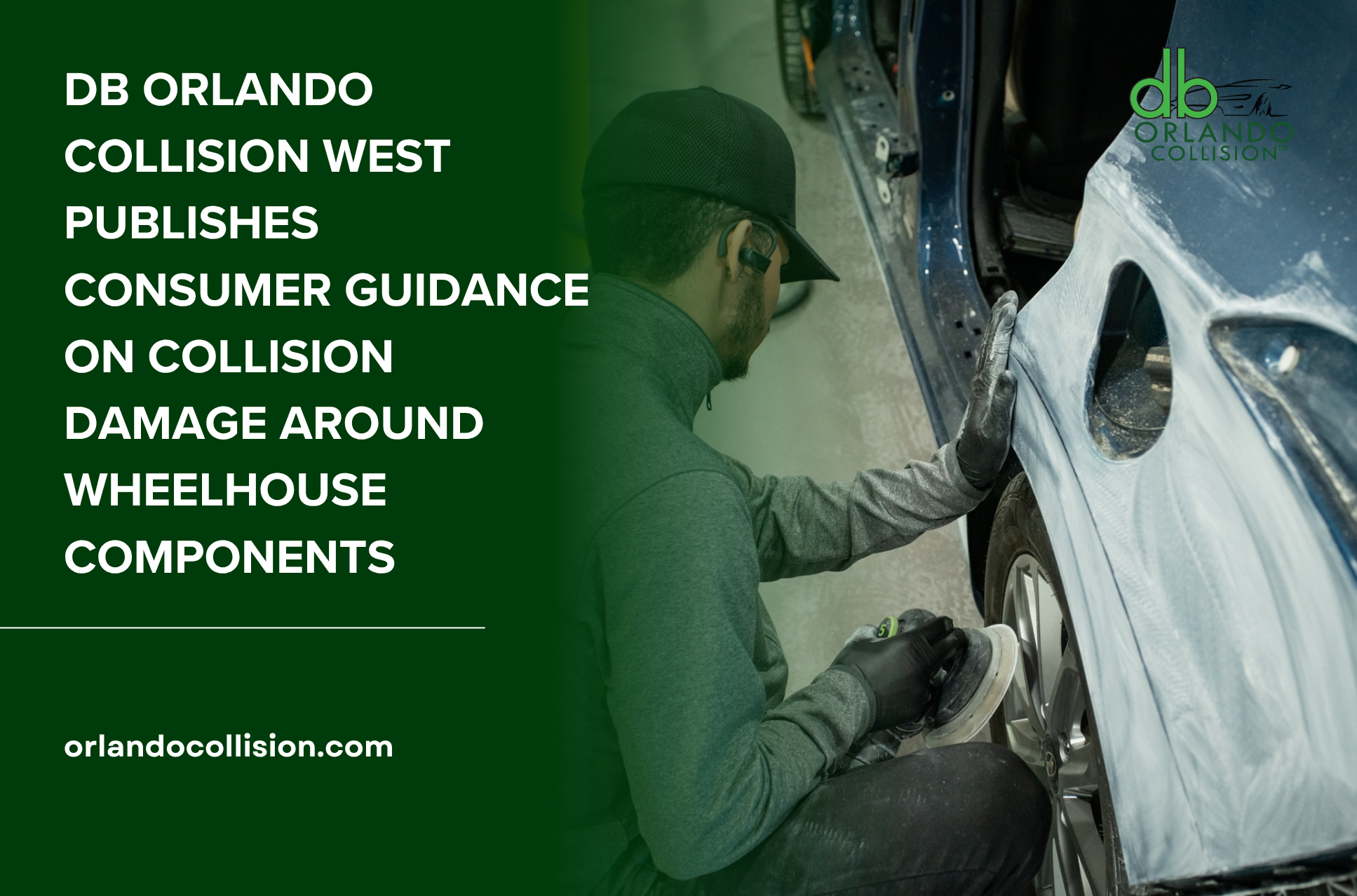

Orlando, FL – October 28, 2026 – PRESSADVANTAGE –
db Orlando Collision West has published new consumer guidance explaining collision damage around vehicle wheelhouse components, an area that can be less familiar to drivers than the fender, quarter panel, wheel, or tire. The resource is designed to help vehicle owners understand wheelhouse terminology when reviewing a collision repair estimate and why damage near a wheel opening may involve several separate components.
The resource, “Consumer Guidance on Collision Damage Around Wheelhouse Components,” adds a wheelhouse-specific topic to db Orlando Collision West’s existing collision repair information. It addresses a consumer information gap created by the location of many wheelhouse components behind exterior panels and liners, where their condition may not be apparent during an initial exterior inspection. Pasted markdown
A wheelhouse generally surrounds part of the wheel and tire within the vehicle body. Depending on the vehicle and whether the area is at the front or rear, it can include inner body components, liners, attachment points, seams, brackets, and adjoining portions of the fender, quarter panel, rocker, floor, or other body sections.
The guidance explains that these components should be distinguished from the more visible exterior damage a driver may notice immediately after a collision.
For example, an impact near a wheel opening may leave a dented fender or quarter panel. The condition of that exterior panel provides information about the collision, but it does not automatically establish that the wheelhouse behind it has also been damaged.
When the location of the impact makes an area behind a wheelhouse liner relevant, technicians can remove or reposition the liner as appropriate to inspect components that were previously difficult to see. This additional access allows the repair plan to be based on observed conditions rather than assumptions about concealed damage. Pasted markdown
The new resource also addresses a distinction that can be confusing when consumers review estimates involving damage near a wheel.
Wheelhouse components are part of the vehicle body, while the nearby wheel, tire, steering, and suspension components serve different functions. Although several of these areas can be involved in the same collision, damage to one does not establish damage to the others.
A damaged wheel or tire, for example, does not independently establish that the surrounding wheelhouse has been affected. Similarly, body damage around a wheel opening does not automatically establish a suspension problem.
Separating these components gives consumers a clearer way to understand why an estimate may contain different body and mechanical operations associated with the same general collision area.
Vehicle construction can further influence the repair plan.
Wheelhouse components can differ in shape, material, attachment method, and relationship with surrounding body sections among makes, models, and model years. Some designs can include multiple layers or adjoining components connected using manufacturer-defined methods. Pasted markdown
OEM, or Original Equipment Manufacturer, repair information can provide instructions specific to the vehicle being repaired. Depending on the component, that information can address construction, joining methods, repair limitations, removal and installation procedures, measurements, and related repair operations.
db Orlando Collision West provides additional information about manufacturer-specific repair considerations through its OEM certification resource.
The consumer guidance also explains why repair-versus-replacement decisions cannot be determined solely by the visible size of a dent.
Component material, damage characteristics, accessibility, construction, and applicable manufacturer procedures can influence the repair approach. A localized damaged area can therefore present different considerations from deformation extending into an attachment point or adjoining body section.
If replacement of a wheelhouse-related component becomes part of the repair plan, technicians may also encounter attachment areas, factory joints, coatings, sealers, and adjoining materials.
These details help explain why an estimate can contain several operations even when the visible collision damage appears concentrated around one wheel opening.
The publication also addresses corrosion protection and factory-applied sealers as examples of repair considerations that may not be obvious to a vehicle owner.
Wheelhouse areas are exposed to moisture, dirt, and road debris during normal driving. When a collision repair affects protected metal surfaces, joints, or enclosed areas, applicable vehicle procedures can identify how materials disturbed by the repair should be addressed.
These operations do not apply identically to every wheelhouse repair. Their relevance depends on the affected component and the work performed.
Another consumer use case covered by the resource involves tire clearance.
Collision-related deformation around a wheel opening or displacement of a wheelhouse liner can alter the physical relationship between the tire and surrounding body components. When relevant to the collision, technicians can document clearance, displaced liners, deformation, or evidence of contact.
Electrical components can also be located in or near wheelhouse areas on some vehicles. Wiring, harnesses, sensors, and other equipment may be routed through adjoining body sections.
When this equipment is involved in the collision area or affected by repair operations, technicians can evaluate its condition and follow applicable vehicle procedures. The presence of electronic equipment is determined by the individual vehicle rather than assumed for every impact near a wheel.
The guidance also gives consumers a simplified explanation of measurement.
Measurement may be used when technicians need additional information about the position of an affected body component or attachment area. It can supplement visual inspection by providing information that can be compared with applicable vehicle specifications.
The presence of a measurement operation does not by itself establish that broader structural movement has occurred. Instead, measurement provides additional information when component position is relevant to the repair.
The new resource is intended to be particularly useful when a collision estimate includes terms such as wheelhouse, inner wheelhouse, wheelhouse liner, or related attachment areas.
These terms can be unfamiliar because consumers generally see the exterior fender, quarter panel, tire, and wheel rather than the body components positioned farther inside the wheel opening.
The resource also gives drivers context for why two vehicles with similar-looking exterior damage can receive different repair plans. Vehicle construction, materials, component relationships, and manufacturer procedures can differ even when the visible collision damage appears comparable.
That distinction is the central focus of the October publication.
Rather than treating damage around a wheel as a single repair category, the resource helps consumers distinguish exterior body panels, inner wheelhouse components, liners, mechanical components, and electronic equipment. Each represents a different part of the vehicle and can appear separately in collision repair documentation.
The publication also explains why an estimate may be updated when previously covered areas become accessible during repair planning. If additional collision-related conditions are documented after appropriate access is gained, those findings can be incorporated into the repair scope. This process does not presume that additional damage will be found.
db Orlando Collision West’s auto body repair information provides broader context about body components repaired after an accident.
The new wheelhouse resource narrows that information to a specific and less-visible portion of the vehicle. It gives consumers a practical reference for understanding what the wheelhouse is, how it differs from nearby mechanical components, and why vehicle construction can affect repairs around a wheel opening.
db Orlando Collision West provides collision and auto body repair services at 6359 Edgewater Dr, Orlando, FL 32810, United States. The October resource adds wheelhouse terminology and repair-planning information to the company’s consumer materials for drivers reviewing collision repair documentation.
###
For more information about db Orlando Collision – West, contact the company here:
db Orlando Collision – West
Drew
407-436-6500
Drew@orlandocollision.com
6359 Edgewater Dr, Orlando, FL 32810, United States

