Credit score nation: How much do people think their score defines their financial future?
Independent Lending reports that a survey reveals most U.S. adults feel stressed and distrustful about their credit
Press Release Disclaimer: This is a press release distributed through the XPR Media network. It has not been independently verified by our newsroom.



Khosro // Shutterstock
Credit score nation: How much do people think their score defines their financial future?
This year, rental payment history is moving from the margins of mortgage lending into the score itself. In April 2026, the Federal Housing Finance Agency announced that Fannie Mae would accept VantageScore 4.0, a model that builds rent payments into the credit score rather than treating them as a supplemental underwriting input, with historical score data published on July 1. A new survey of 1,000 U.S. adults commissioned by Independent Lending captures the demand side of that change. (The survey sample skews female and lower income, detailed in the methodology section, below.)
Just 19% of respondents said they check their credit score regularly and feel in control of it. Some 27% avoid looking at the number altogether because of the stress it causes. And asked what single change they would make to how creditworthiness is judged, the top answer was to count the rent and utility bills they already pay.
The picture that emerges is of people governed by a number they distrust and would rather not face, even as the system begins, slowly, to see them more fully.
Key findings
- 1 in 4 people are too stressed to check their credit score.
- Rent is starting to count in credit scores, people’s most requested fix
- Most people surveyed say their credit score misses the full story.
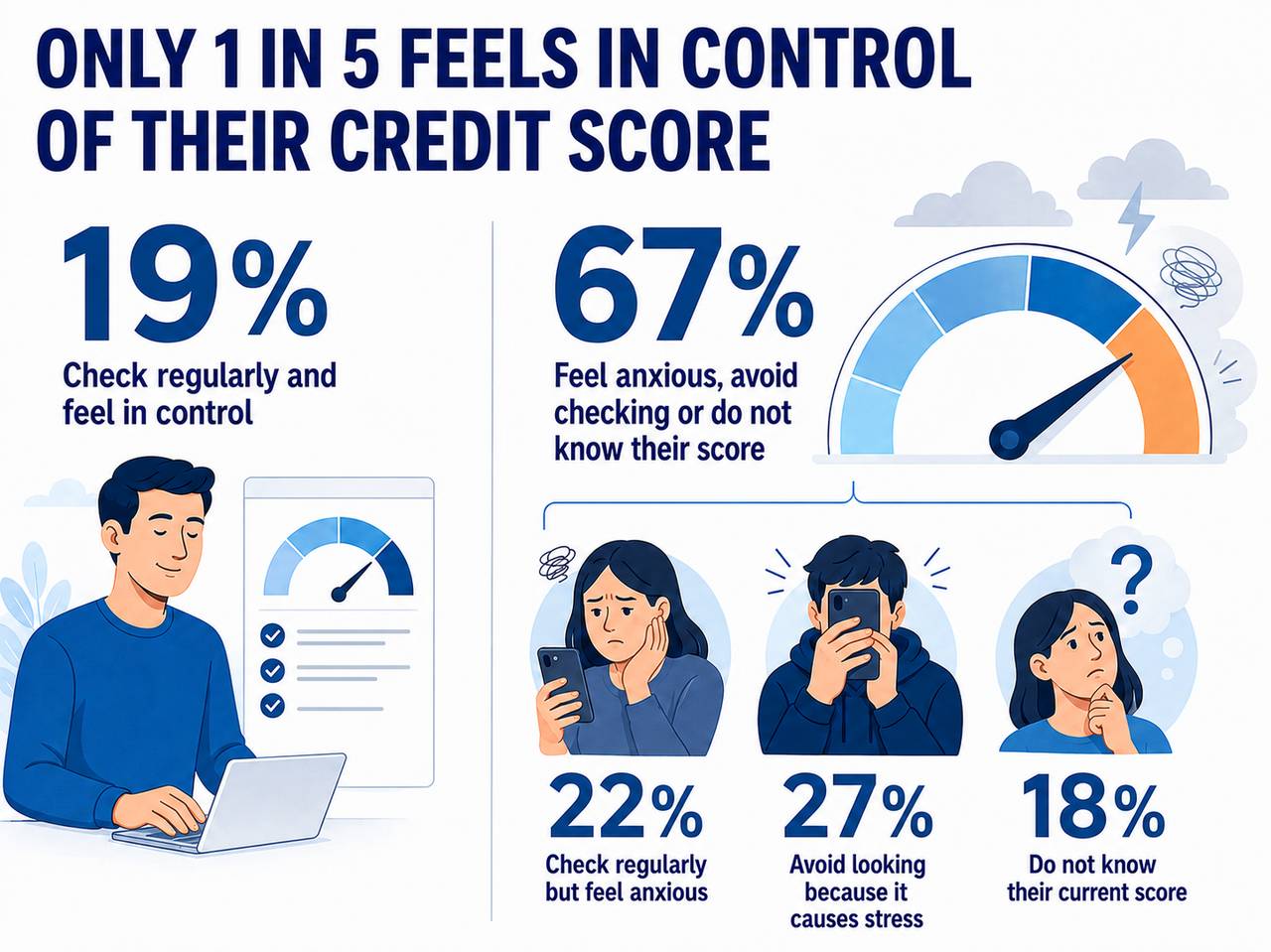
Only 1 in 5 respondents feels in control of their credit score
Independent Lending
The credit score was designed to be a neutral measurement, a shorthand lenders could trust. For the people being measured, neutrality is hard to find. Just 19% of respondents said they check their score regularly and feel in control of it.
The other side of that ledger is crowded. Twenty-two percent check regularly but feel anxious about what they see. Twenty-seven percent avoid looking altogether because it causes them stress. Eighteen percent don’t know their current score at all, and another 14% rarely think about or manage it.
Add those groups up, and 67% of respondents describe a relationship with their credit score that ranges from uneasy to estranged. The number that governs their access to housing and borrowing is one most of them would rather not face.
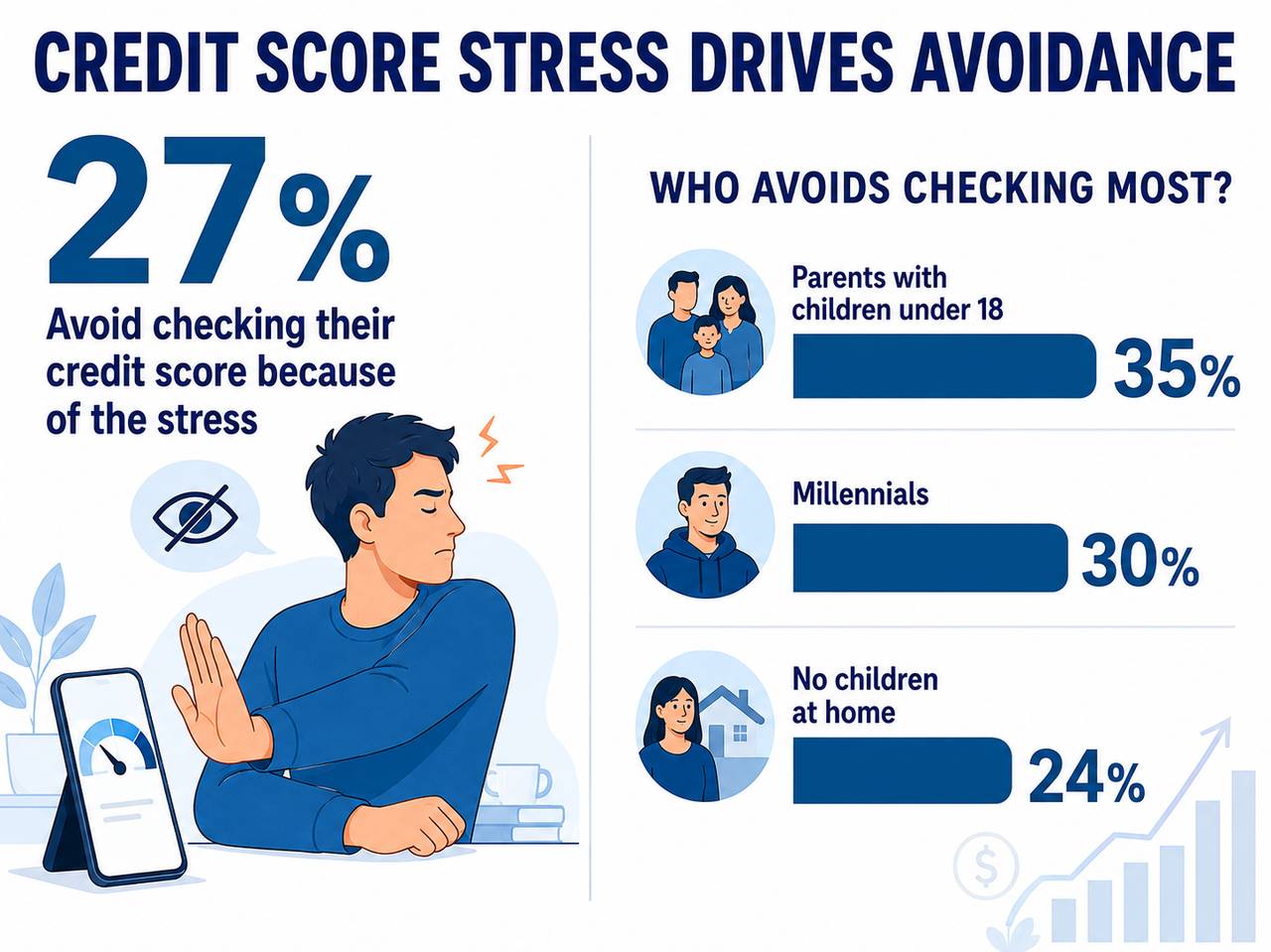
27% avoid checking their credit score because of the stress
Independent Lending
Some 27% of respondents say they specifically avoid checking their credit score because of the stress it causes. That group is larger than the share who feel in control.
The pressure concentrates where budgets are tightest. Avoidance peaks among parents with children under 18 at 35% and millennials at 30%, compared with 24% of respondents with no children at home.
These are people navigating rent, childcare and rising grocery bills who know the number matters. Looking at it has simply become one more source of anxiety in an already stretched month, so they don’t.
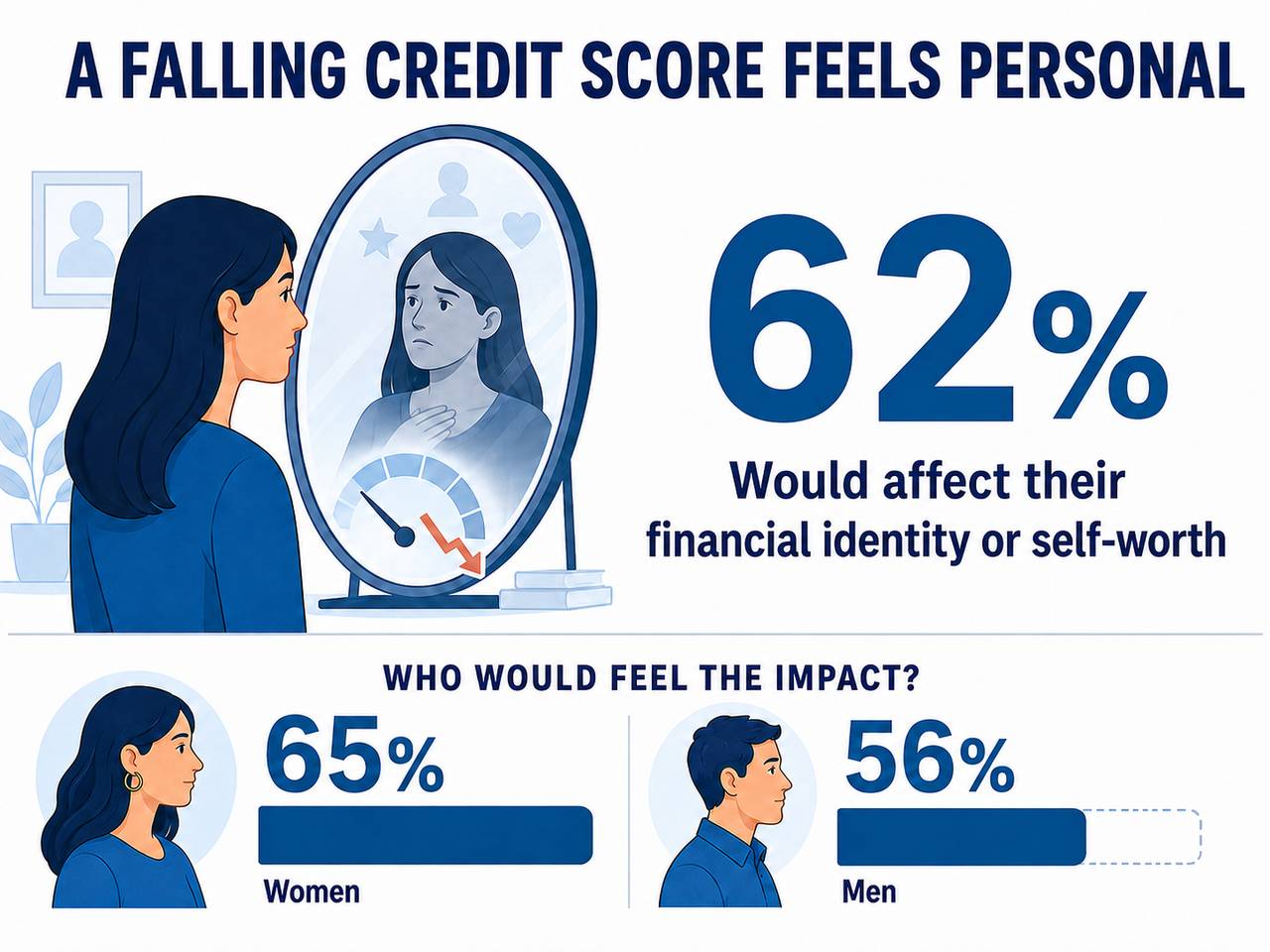
Nearly 3 in 10 say a falling score would deeply affect their self-worth
Independent Lending
Asked how a significant drop in their credit score would affect their sense of financial identity or self-worth, nearly three in ten respondents, 29%, said a great deal. Including those who said somewhat, the figure reaches 62%. Only 19% said it wouldn’t affect them at all.
Women in the sample carry the weight more heavily than men, at 65% versus 56%.
That’s a striking admission about a number that was never meant to measure character. Somewhere along the way, a lending risk metric became a proxy for personal worth, and most respondents now experience it that way.
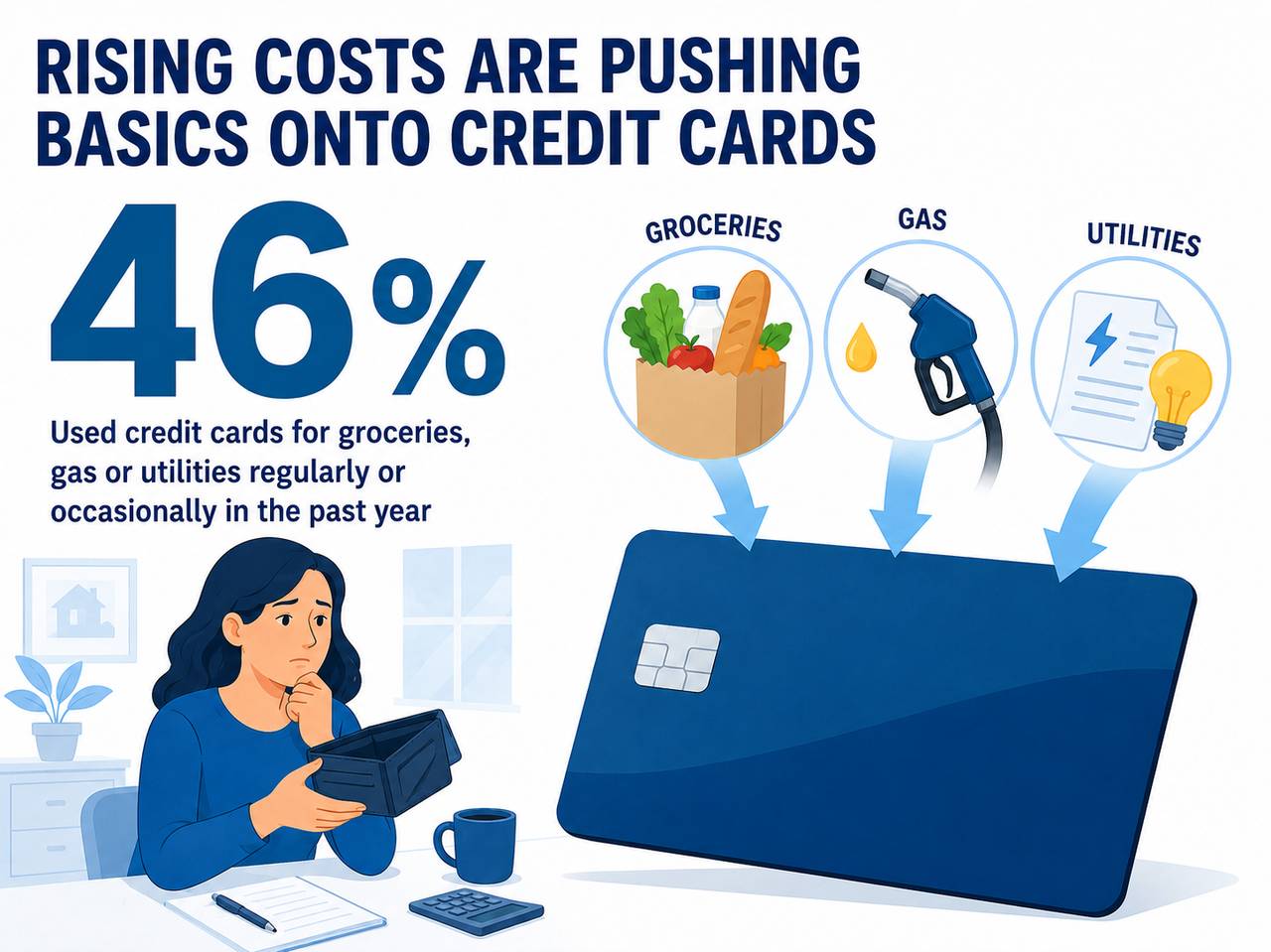
Nearly half put necessities on credit cards regularly or occasionally
Independent Lending
Looking at why scores are under pressure in the first place, some 46% of respondents say rising costs pushed them to put basics like groceries, gas or utilities on credit cards regularly or occasionally in the past year. Nineteen percent do it regularly and describe it as a normal part of managing expenses. Counting those who did so rarely, only in a genuine emergency, the figure rises to 63%.
Parents with children under 18 are hit hardest at 59%, against 42% of respondents with no children at home. Among Gen Z, the figure is 54%.
The survey data parallels national reporting: Bankrate’s 2026 Credit Card Debt Report found 33% of U.S. adults were using credit cards as a financial lifeline for necessities, and 47% of cardholders carry a balance. Every one of those balances feeds back into the score, which means the cost of getting through the month is often a lower number at the end of it.
Three-quarters say the score doesn’t tell the truth about them
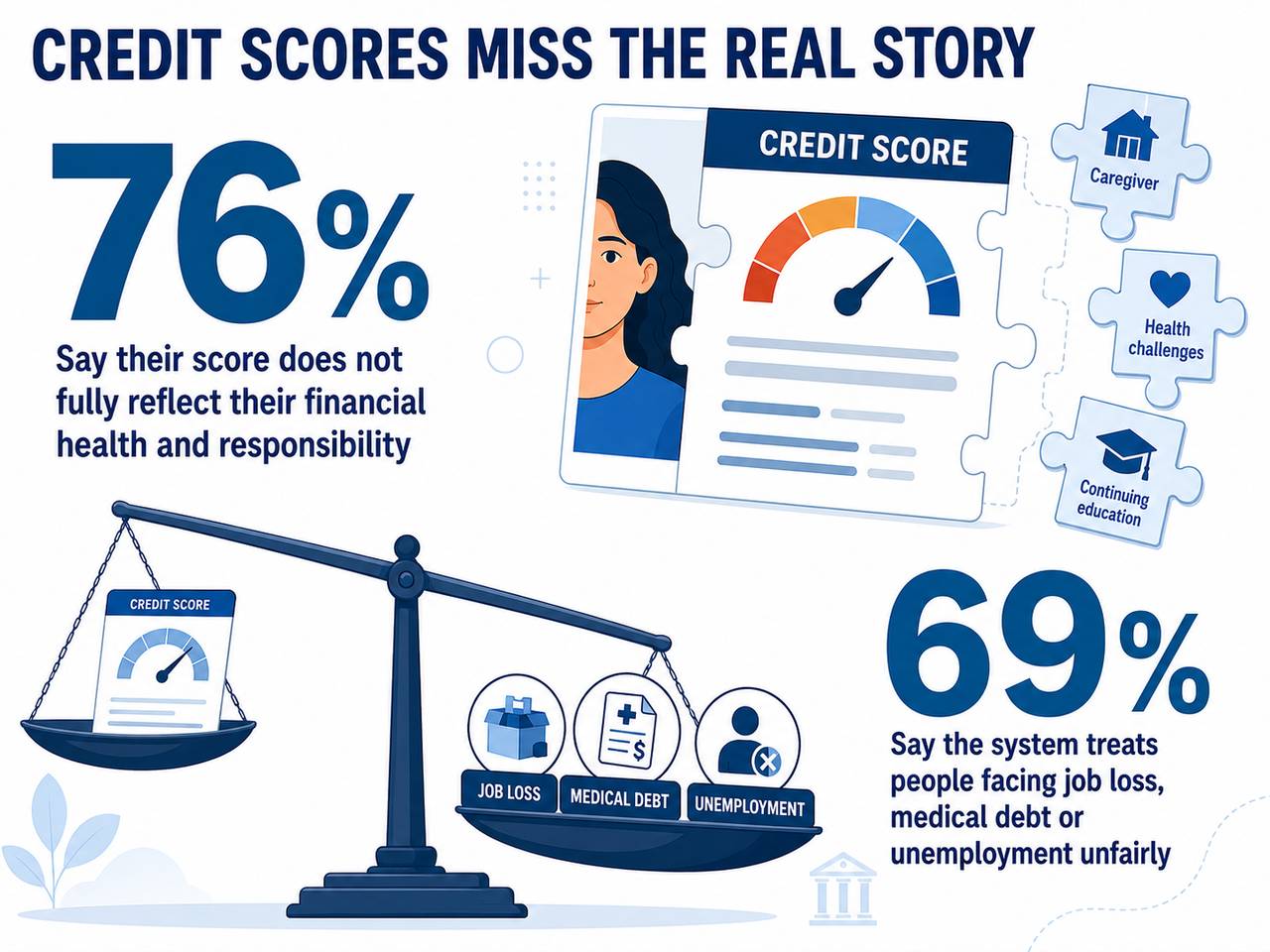
Given all that, the verdict respondents hand down on the system itself follows a certain logic. Only 24% said their credit score very accurately reflects their true financial health and responsibility. The remaining 76% see gaps: 39% say it captures part of the story but misses important context, 22% say it penalizes people for circumstances beyond their control and 15% call it a deeply flawed and outdated system.
The judgment gets harsher when hardship enters the picture. Asked how fairly the credit system treats people who have experienced job loss, medical debt or unemployment, 69% said somewhat or very unfairly. Nearly a third, 32%, chose very unfairly. Just 7% said the system treats them very fairly.
Respondents with some college or vocational training were the most critical, with 77% calling the system unfair, compared with 63% of bachelor’s degree holders. As for income, the unfairness verdict peaks in the middle bands, at 73% of households earning $25,000 to $49,999 and 72% of those earning $50,000 to $99,999, against 64% of households under $25,000.
A third of respondents want alternative data in credit decisions
Independent Lending
No single fix commands a majority. But 34% of respondents converge on the same idea: Judge people on financial behavior that the current score can’t see, whether verified rent and utility payments (21%, the top single answer) or cash flow and financial assets (13%).
Another 19% want recent financial behavior to count more than older mistakes, a preference that jumps to 32% among Gen Z, the highest of any generation. Rounding out the list: more transparent scoring methods (17%), the ability to provide context about documented hardships (16%) and a standardized score across lenders (14%).
This is where the survey meets the news cycle. FICO Score 10T and VantageScore 4.0 both incorporate rental payment data, and the FHFA’s April 2026 decision means the change respondents most want is now entering the mortgage system itself. What people are asking for is no longer hypothetical. It’s arriving, just slowly.
Summary
The credit score isn’t going anywhere, and the people in this survey seem to know it. What comes through in the data is a request to be seen accurately. Only 15% called the system deeply flawed and outdated; far more pointed to specific, workable gaps. Count the rent that gets paid on time. Weigh who someone is now over who they were five years ago.
Most respondents are still paying their bills and still managing tight months, doing the things creditworthiness is supposed to reward. The frustration is that the credit score often doesn’t reflect those efforts. The fixes they’re asking for already exist in early form, and the gap between what the score measures and what people actually do with their money is now among the most fixable problems in consumer finance.
Methodology
To understand how people approach their credit scores, Independent Lending surveyed 1,000 U.S. adults in August 2026 via the Pollfish platform. Participants answered questions about their relationship with their credit score, the emotional weight it carries, how fairly and accurately they believe the system judges them and what they would change about how creditworthiness is evaluated. Responses were analyzed by demographic groups to identify trends and disparities.
This sample is 69.5% female and skews lower-income than the U.S. adult population, with 45.0% of respondents reporting household income under $25,000. Findings should be read as representative of this sample rather than as a general-population benchmark.
This story was produced by Independent Lending and reviewed and distributed by Stacker.